Many women are all too familiar with the frustration—despite maintaining a healthy diet and regular exercise, the weight keeps increasing, often unevenly and uncontrollably. Persistent tension and pain in the arms and legs can occur even at rest, and simple daily tasks become increasingly difficult. These may be signs of stage 3 lipedema, the most advanced form of this chronic fat distribution disorder.
At this stage, targeted treatment is essential to manage symptoms effectively—but that begins with a clear and accurate diagnosis.
At LipoXpert, we are committed to restoring quality of life and confidence to those affected by lipedema. We recognize the unique challenges faced by patients in stage 3 and approach each case with the seriousness and compassion it deserves. In the following section, we explain the key characteristics of stage 3 lipedema and introduce the most effective treatment options available.
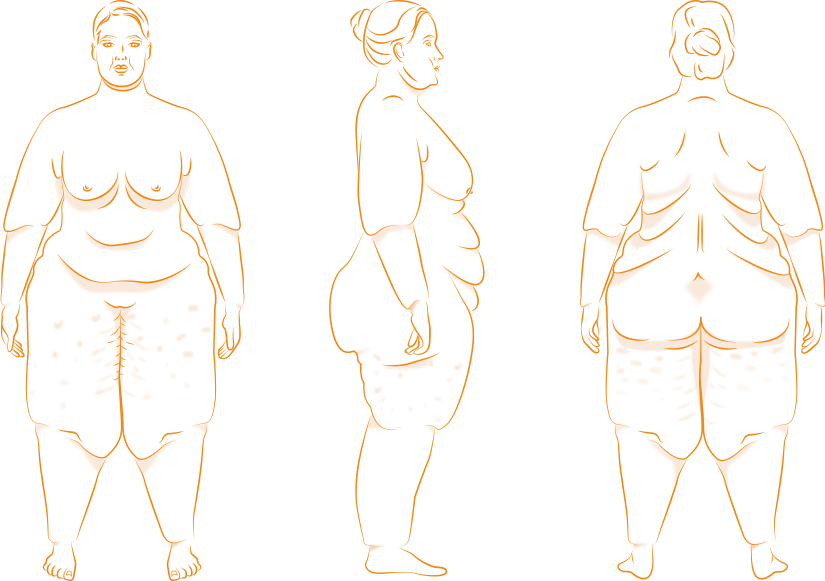
Stage 3 lipedema is the most advanced form of chronic fat distribution disorder. Lipedema is a disease in which – almost exclusively in women – disproportionate fat distribution occurs in certain regions of the body. It usually affects the legs and almost always the arms as well. In stage 3, the lipedema is already very pronounced and there are clear changes in the appearance as well as sometimes massive complaints such as pain and feelings of tension. Often it is a mixed form: patients think it is obesity and in reality it is lipedema. This explains why weight loss is not successful.
In the third stage, lipedema is usually manifested by very hardened subcutaneous tissue and considerable fat flaps, which in turn restrict movement and can cause chafing and inflammation in the skin folds. In addition, self-confidence suffers in many sufferers, in some cases to the point of social isolation and severe depression. As the disease is still quite unknown in society, many lipedema fighters encounter a lack of understanding for their situation, as lipedema is confused with obesity.
The appearance and symptoms of lipedema can vary from patient to patient. In the advanced stage, lipedema means significant restrictions for those affected.
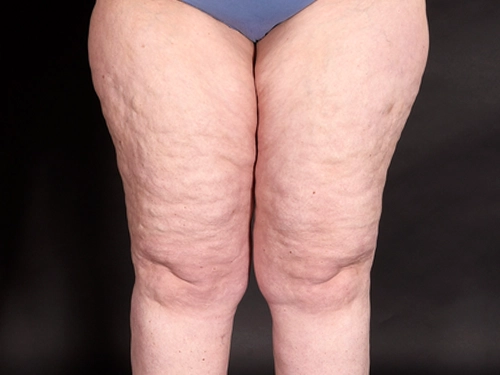
This is what stage 3 lipedema can look like:
The exact causes of lipedema are not yet fully understood. However, it is assumed that hormonal changes, genetic factors, a microangiopathy and a disturbed fat metabolism regulation play a role. What is certain, however, is that lipedema is not caused by a lack of exercise or a poor diet. These factors can only contribute to the further worsening of the disease. If you are overfed at the same time, so that you have a mixed form of obesity and lipedema, it is possible to reduce the diet-related fat. However, this is much more difficult for these patients than in the case of pure obesity.
Compared to stage 1 or 2 lipedema, stage 3 lipedema already involves more extensive fat deposits, some of which have already been transformed into fibrous tissue (which can no longer be suctioned off). The affected areas of the body may be greatly enlarged and so-called fat bulges may form. The total weight and the shifted leg axis caused by the fat deposits on the inside of the legs lead to premature wear and tear of the joints. As a result, arthrosis develops. The disproportionate distribution of fatty tissue is clearly visible, especially on the extremities.
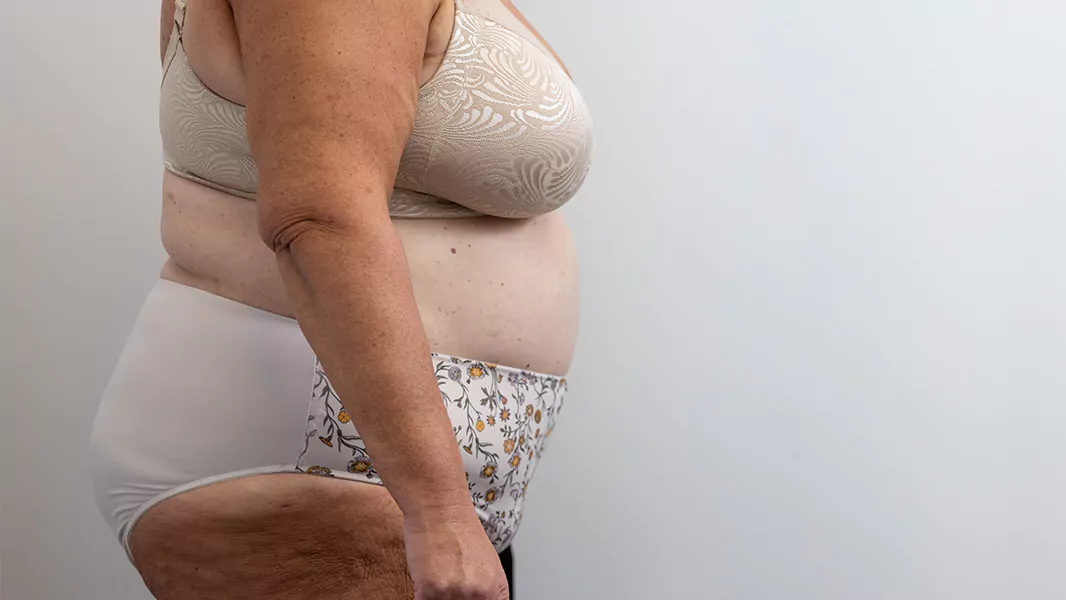
Lipedema is a progressive fat distribution disorder. This means that the symptoms also increase with time and changing stage. In stage 3, symptoms include:
- Large fat deposits: The legs or arms are greatly enlarged and have disproportionate fat distribution. Often the affected regions are heavier than the rest of the body. The hands and feet are proportionally very slim.
- Hardened tissue: The subcutaneous fatty tissue is clearly hardened and sensitive to pressure.
- Fat bulges: The fat flaps hang down on the inner sides of the upper arms and thighs and can put additional strain on the joints due to their weight. Chafing, chafed areas, fungal infections and inflammation are also common side effects.
- Tightness and pain: The skin can be tight and sensitive. Affected people often complain of pain, both to the touch and at rest, as well as a feeling of coldness when standing or walking for long periods of time.
- Lymphoedema: Secondary lymphoedema usually occurs due to the heavy weight.
In the third stage, adapted treatment is absolutely necessary.
The diagnosis of advanced stage 3 lipedema can usually be made relatively easily by a medical specialist who specialises in lipedema and often has the additional title of phlebologist and lymphologist. In particular, a specialist in phlebology (vein doctor) or a specialist who specialises in lipedema have the necessary knowledge and experience to make an accurate diagnosis.
Diagnosis of stage 3 lipedema is usually made by the following procedures:
The diagnostic interview usually begins with questions about existing symptoms and possible previous illnesses. It is determined whether you experience pain, feelings of tension or increased sensations of pressure and cold. Information about other lipedema cases in your family can also be helpful.
A specialist can often make a probable diagnosis of stage 3 lipedema just by looking at the lipedema-typical areas with disproportionate fat deposits, clearly hanging skin flaps and thickened joints.
The pressure and the sensitivity to touch can be measured with a pinch test. Furthermore, the subcutaneous fatty tissue structure can be determined by palpation. In third-stage lipedema, the hardened subcutaneous fat tissue can be clearly palpated.
Conservative therapy can help relieve symptoms and slow the progression of stage 3 lipedema – but it cannot be prevented. Through physical therapies such as
- manual lymphatic drainage,
- Compression therapy and
- Exercise therapy
can improve the lymph flow and reduce the symptoms somewhat. An adapted diet can also have a supportive effect. However, you should be aware that conservative therapy alone is often not sufficient to effectively treat lipedema in advanced stages. Also, the aesthetic appearance cannot be changed in this way. In such cases, liposuction can be considered as an effective surgical option.
n advanced stage 3 of lipedema, severe discomfort often occurs, which means that conventional conservative therapy measures often reach their limits. In such cases, liposuction can be considered as a possible solution. Liposuction for lipedema is currently the only method to completely remove diseased fatty tissue in the long term. This means that lipedema surgery is also a solution for adjusting the contours of the body and thus giving patients new self-confidence in an aesthetic sense as well.
In some cases, liposuction can even achieve complete freedom from symptoms. Our experienced LIPODOCs perform liposuction on lipedema patients in all stages and are at your disposal with their specialist knowledge and experience. We understand the distressing effects of stage 3 lipedema and are committed to helping you achieve an improved quality of life. If obesity is present, we will support you in the first step of trying to lose weight with a special diet, which can also be successful with lipedema.
If stage 3 lipedema is left untreated, symptoms may continue to worsen. The fat deposits can continue to increase, which can lead to an even greater impairment of body shape and mobility. The pain and tightness may increase, and there is an increased risk of developing lipolymphoedema, infections and other complications. In addition, untreated lipedema can have a significant impact on the psychological well-being of those affected, as it can lead to a negative body image, low self-esteem and social isolation.
Living with stage 3 lipedema can be challenging, but you are not alone. There is now a large lipedema community that offers advice, tips and tricks, shares experiences and celebrates joint successes.
You can incorporate the following tips into your everyday life:
- Diet and exercise:
To manage the symptoms of stage 3 lipedema, a healthy lifestyle with a balanced diet and regular physical activity is very important. Eat nutrient-rich, low-carbohydrate foods and avoid alcohol and nicotine. Relieving sports such as swimming or aqua gymnastics have a positive effect on the joints. - Be aware of temperature fluctuations:
Extreme temperatures can have a negative effect on the symptoms of stage 3 lipedema. It is therefore advisable to avoid both intense heat and extreme cold. - Compression:
An effective measure to alleviate the symptoms of very advanced lipedema is the regular wearing of suitable compression garments. The pressure that the compression garment exerts on the tissue can counteract swelling. Be sure to wear the compression garment regularly and ensure that it fits correctly to get the best possible effect.
Lipedema can be challenging, but with the right treatment and self-care, quality of life can be improved. We are committed to providing you with quality information and support. If you have any further questions or need more information, please do not hesitate to contact us. Together we can make managing stage 3 lipedema easier.