Facing Lipedema: Finding the Right Path Forward
Lipedema can significantly impact daily life—even in its early stages—causing both physical discomfort and emotional strain for many women. Understanding which stage your condition is in is essential for determining the most effective treatment approach.
At LipoXpert, we recognize the challenges lipedema presents. Our goal is to support you with clarity, compassion, and a holistic treatment concept designed to ease your symptoms and improve your quality of life. Together, we’ll help you gain a better understanding of your condition and work toward lasting relief.
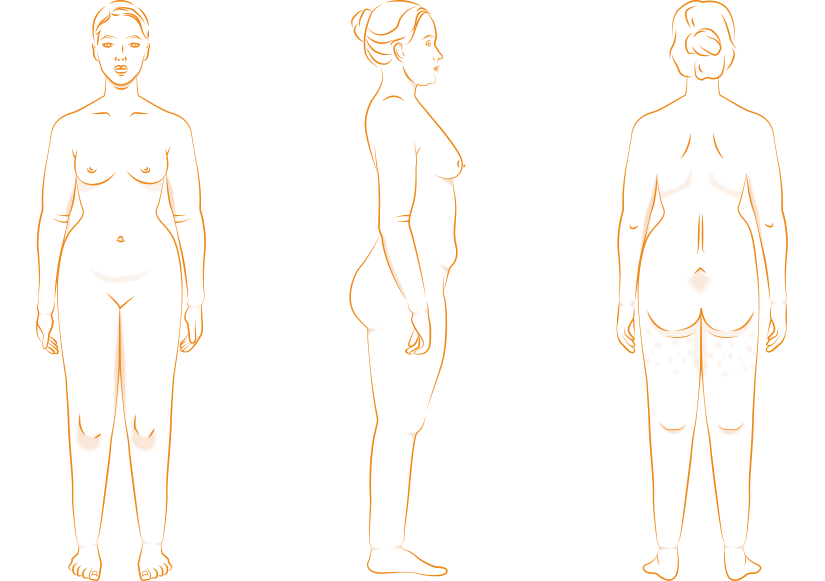
Stage 1 lipedema marks the beginning of a chronic fat distribution disorder that primarily affects women. It typically presents as uneven fat accumulation on the legs, buttocks, and sometimes the arms. At this early stage, symptoms can be subtle and easily dismissed—often going unnoticed by others. As a result, many women struggle in silence, receiving little understanding or support from their surroundings.
But your experience is real. If something feels off, trust your instincts. Lipedema is a medical condition—not simply a cosmetic issue—and it cannot be reversed through exercise, dieting, or healthy eating alone. Early recognition is key to managing symptoms and slowing progression.
The appearance as well as the respective symptoms of lipedema can vary from patient to patient. In the early stages, the disease is often difficult to recognise externally, but can already cause discomfort for the person affected.
The exact causes of lipedema are not yet fully understood. It is assumed that genetic factors can play a role. Hormonal changes, especially during puberty or pregnancy, can make lipedema worse or cause it to appear for the first time.
For example, there is a frequency in close relatives. Often lipedema occurs more frequently in grandmothers – also on the father’s side -, mothers and daughters.
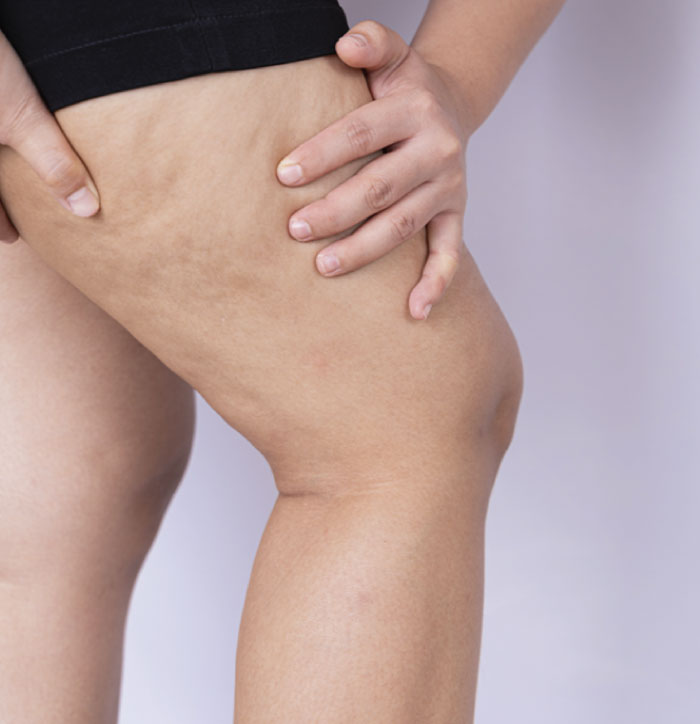
The symptoms of stage 1 lipedema can vary, but they are often subtle and can be confused with other conditions. Here are some common symptoms to look out for:
- A disproportionate increase in fatty tissue on the legs, buttocks and/or arms that is resistant to exercise and diet.
- The affected areas often still feel soft, but rice grain-like nodules may already be noticeable in the tissue.
- A slight “orange peel” effect can already be seen in some cases.
- Pressure and sensitivity to touch are more common.
- Despite a healthy diet and regular exercise, the fatty tissue remains.
- Possibly a feeling of coldness in the extremities due to long periods of standing or sitting.
However, you should know that these symptoms can vary from person to person. If you notice one or more of these signs, you should see a doctor who specialises in lipedema to get an accurate diagnosis.
Women present to LipoXpert with a wide variety of lipedema stages. While some already have an exact diagnosis, others are still unsure whether they suffer from lipedema. Whatever your previous experience and your path of suffering, you have come to the right place. We take you and your current situation very seriously and want to give you back unrestricted joy of life and self-confidence.
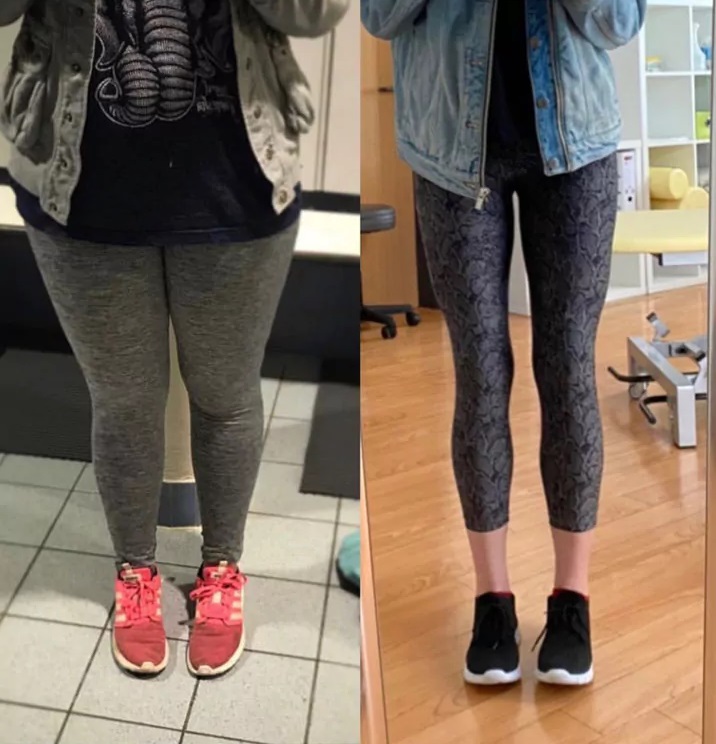
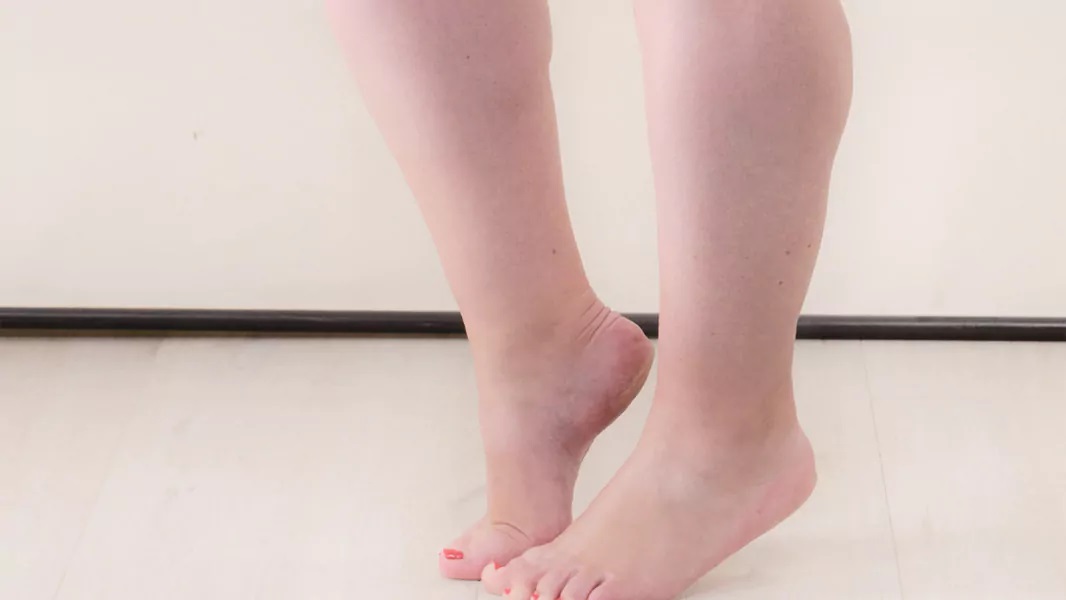
We have already been able to help many lipedema patients with stage 1 by means of diagnosis, tips and tricks for coping with lipedema in everyday life as well as with holistic lipedema treatment. Here we show you how stage 1 lipedema can manifest itself:
Identifying stage 1 lipedema requires a detailed medical history and a physical examination by someone with specific experience in the condition. While general practitioners or family doctors are often the first point of contact, lipedema can sometimes be overlooked—especially in its early stages—due to limited awareness in general medical practice.
Because lipedema has only gained broader recognition in recent years, not all physicians are adequately trained to detect it. For this reason, it’s strongly recommended to consult a specialist who is familiar with the diagnosis and treatment of lipedema to ensure an accurate assessment and timely intervention.
As part of the diagnostic process, the doctor will carry out a detailed examination. Various tests can be carried out for this purpose:
A detailed medical history is an important first step in making a diagnosis. Your specialist will ask you about your medical history, family predispositions and current symptoms. Information about symptoms such as disproportionate fat deposits, pain, tenderness or swelling and bruising can help in the assessment.
Visual assessment plays a significant role in the diagnosis of lipedema. Lipedema specialists can often tell at a glance whether there is a possibility of lipedema. They look at the affected body regions in detail and pay attention to classic areas / predilection sites.
Palpation of the skin is another important method for diagnosing stage 1 lipedema. In doing so, the doctor looks for typical features such as palpable rice grain-like nodules of tissue. Another diagnostic test that is done in conjunction with palpation of the skin is the pinch test. In this test, the skin is pinched lightly in various places. If disproportionate pain already occurs, this indicates lipedema.
Ultrasound examination is generally not considered reliable for diagnosing lipedema, as it cannot distinguish ‘normal’ fat from lipedema fat. However, at LipoXpert we this method in conjunction with other diagnostic procedures to check for varicose veins that could cause extra intra-op bleeding and minimize post-op bruising. This data makes it easier for us to plan the subsequent treatment.
If we can determine that you have the beginnings of lipedema, the next step is to discuss your further treatment options with you.
Treatment for lipedema aims to relieve symptoms, slow the progression of the condition to the next stage and improve your quality of life.
The common treatment methods are:
Conservative therapy includes non-surgical measures. These include, for example:
Manual lymphatic drainage
Manual lymphatic drainage is a proven method for treating lipedema. Here, a trained physiotherapist or lymph therapist performs special hand movements to stimulate the lymph flow and support the decongestion of the tissue. Gentle, rhythmic movements reduce swelling and oedema. Manual lymph drainage can help to reduce the feeling of heaviness in the affected parts of the body and relieve pain.
Compression garments
Compression stockings or trousers apply even pressure to the tissues, thereby supporting lymphatic flow. The compression garment helps to reduce swelling, stabilise the fatty tissue and control the symptoms of lipedema. It should be worn regularly and for a longer period of time to achieve a temporary improvement.
Relieving sports (e.g. swimming)
Although lipedema cannot be cured by sport, certain types of sport such as swimming have a positive effect on the disease. The water pressure results in natural lymphatic drainage, the lymph flow is stimulated, joints are spared and blood circulation is improved. However, you should pay attention to your individual limits and consult with your doctor or physiotherapist to optimally adapt the training.
Ketogenic diet
The ketogenic diet, which is characterised by the renunciation of carbohydrate intake and instead an increased fat intake, is undertaken in some cases as a supportive measure for lipedema. Inflammatory processes often assumed in connection with lipedema are supposed to be stopped in this way and complaints alleviated. In connection with a ketogenic or low-carb diet, an improvement in symptoms such as swelling or pain has been observed in some patients.
These therapeutic approaches can help to reduce swelling, stimulate lymph flow and alleviate discomfort. However, complete freedom from symptoms cannot usually be achieved with them.
So far, the only way to remove diseased fatty tissue in the long term is lipedema surgery. Conservative measures are often not sufficient to alleviate the patients’ high level of suffering – both in terms of discomfort and from an aesthetic point of view. However, because lipedema is a progressive disease, liposuction for lipedema can be the best solution. At LipoXpert we perform lipedema surgery on patients at all stages.
This surgical procedure can relieve pain and tenderness, reduce mobility and improve the aesthetic appearance. Liposuction, also known as liposuction, can significantly reduce the subcutaneous fat layer and in most cases even achieve complete freedom from symptoms.
Lipedema requires continuous self-care and attention in any case. Thus, with the right, early measures, you can significantly slow down the progression of lipedema from stage 1 to stage 2. This also makes it possible to live your daily life with halfway moderate discomfort.
Here are some tips that can help you manage the condition:
- Maintain a healthy lifestyle with a balanced diet and regular exercise.
- Avoid extremes of temperature, as both heat and cold can make symptoms worse.
- Wear appropriate compression garments to support the pressure on the tissues and relieve your discomfort.
- Seek support and exchange with other lipedema fighters in support groups or online forums.
The issue of reimbursement by the health insurance fund is still difficult to keep track of. Just a few years ago, reimbursement was almost unthinkable. In a new decision from 2020, it was decided in the meantime that lipedema surgery can be covered by the health insurance under certain conditions. However, this usually refers to a very pronounced stage 3 lipedema. In any case, these are individual decisions that are closely related to the symptoms and complaints of the respective patient. It is therefore essential that you ask your health insurance company whether costs can be covered for your individual situation.
Lipedema can be challenging, but with the right treatment and self-care, quality of life can be improved. We are committed to providing you with quality information and support. If you have any further questions or need more information, please do not hesitate to contact us. Together we can make managing stage 1 lipedema easier.